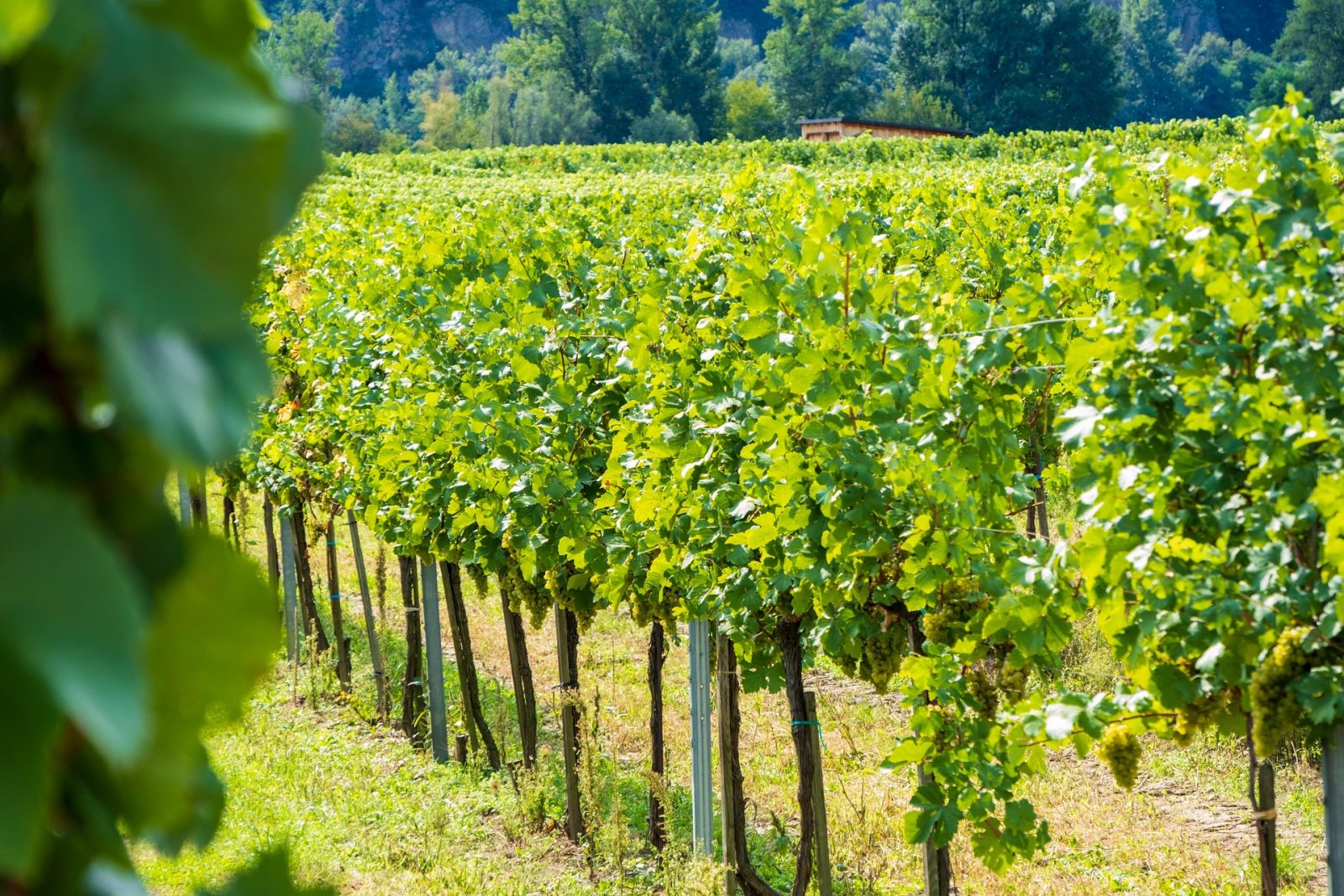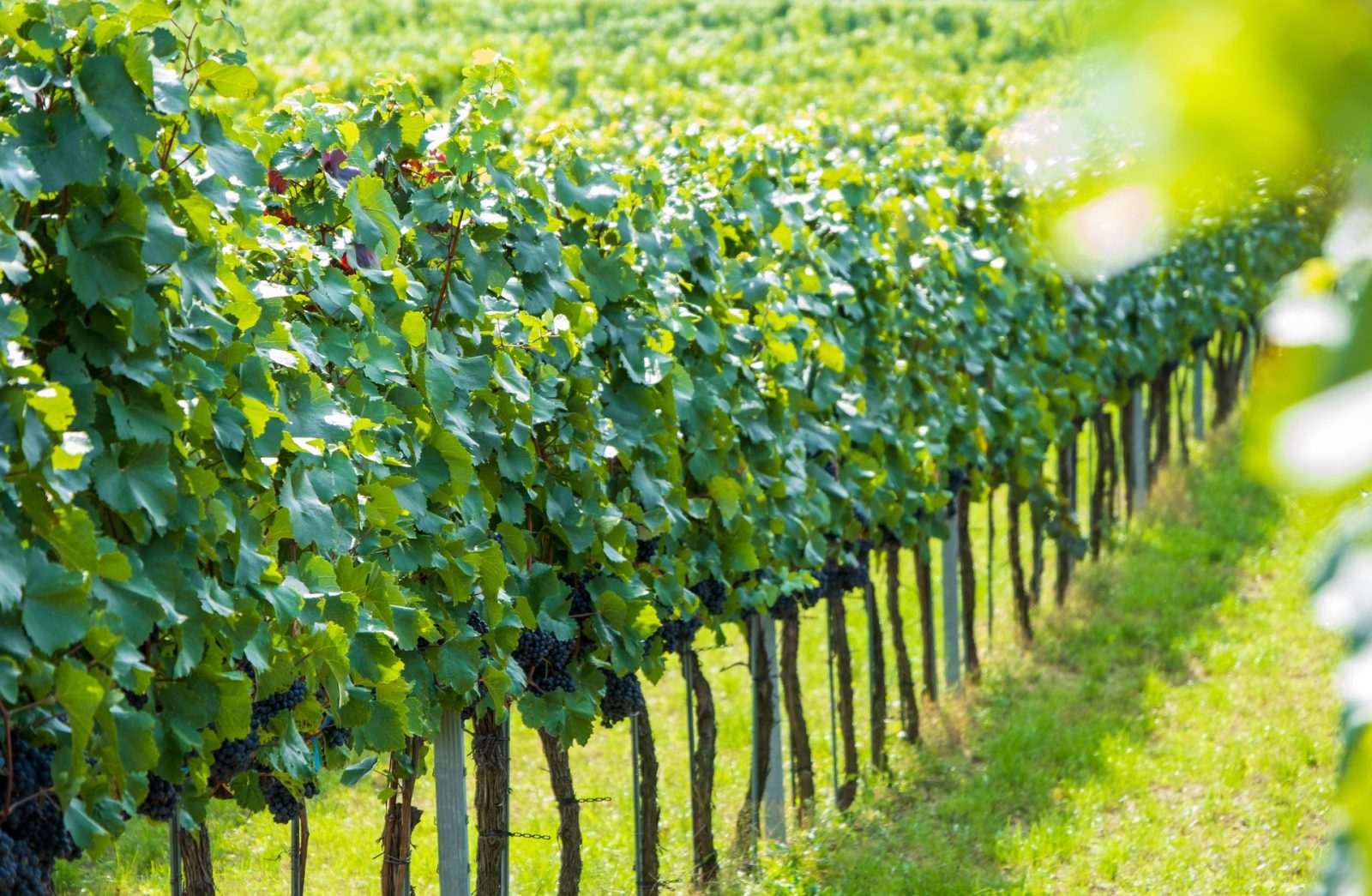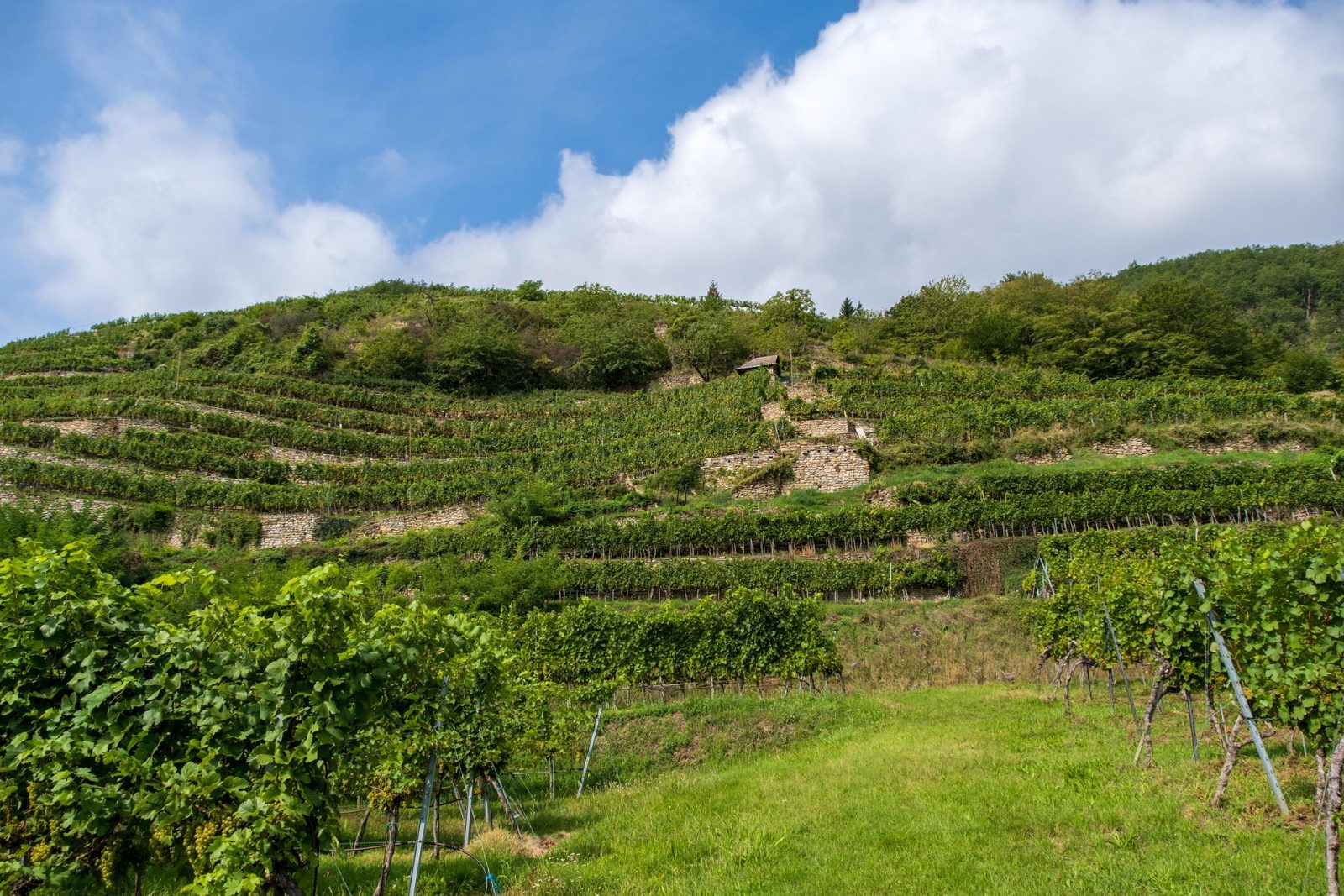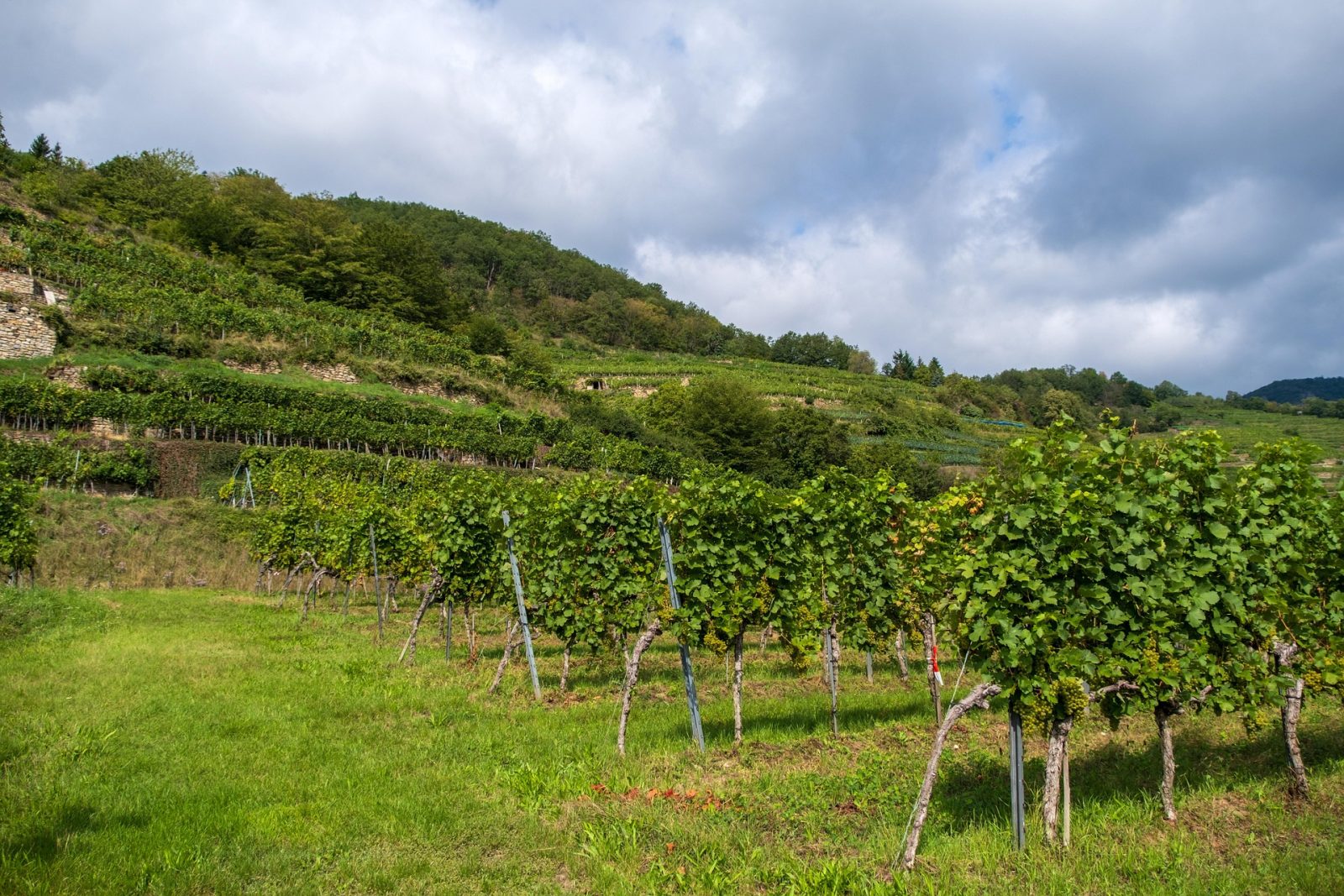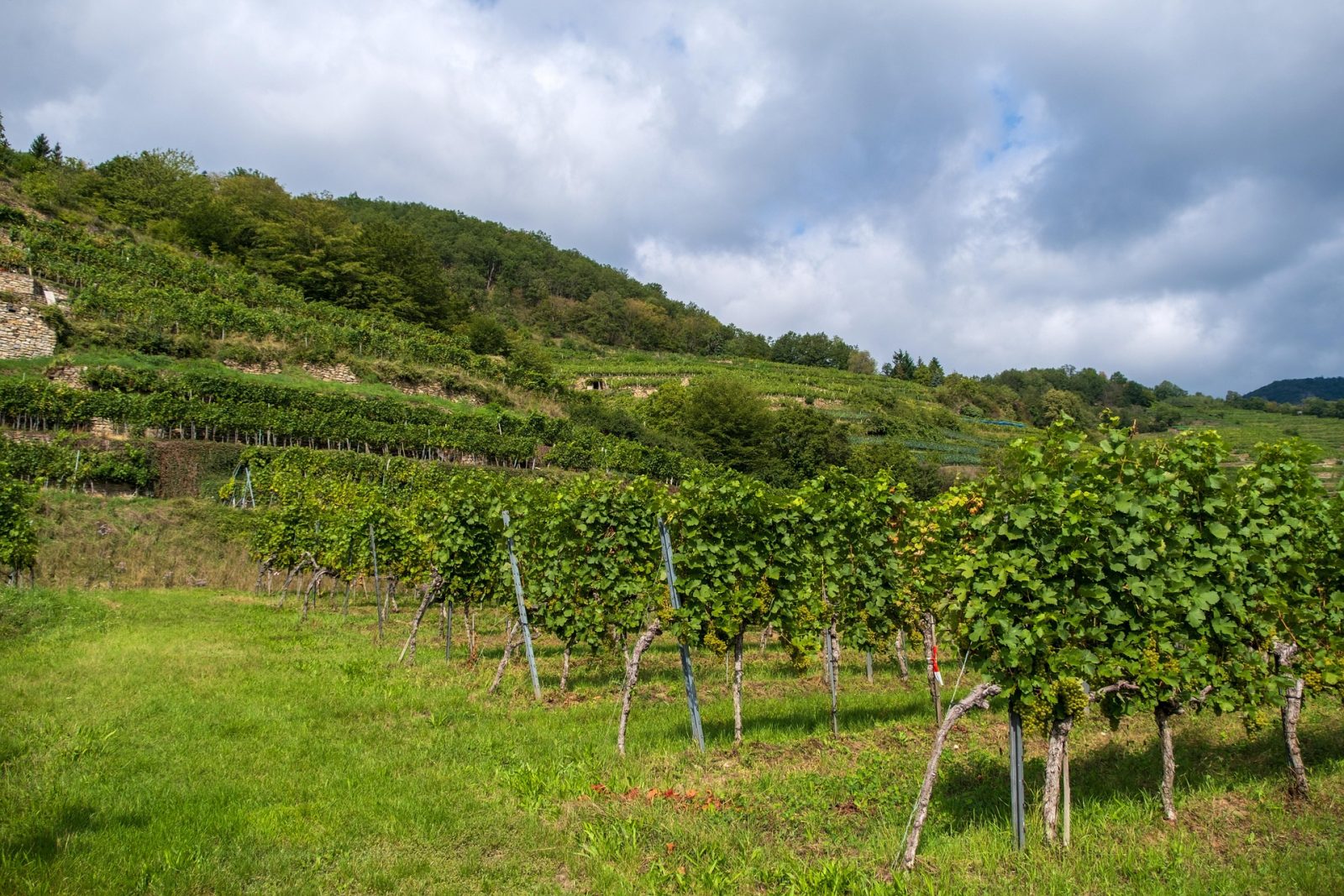
Anyone entering the Danube Valley from Krems or Melk quickly notices that everything here is narrower, steeper, and more intricate than elsewhere. The Wachau is a roughly 33-kilometer-long stretch of the Danube Valley located between Melk and Krems. It has been a UNESCO World Heritage site since the year 2000. Vineyards cling to the hillsides, supported by dry-stone walls. And in late summer, tucked among these stones, one can find a creature basking in the sun—an animal that has lent its name to an entire category of wine: the emerald lizard (*Smaragdeidechse*).
One Valley, Three Tiers
The Wachau follows its own unique approach to the classification of its wines. In 1983, the winemakers' association *Vinea Wachau Nobilis Districtus* established three distinct quality tiers. These categories are based on ripeness and alcohol content and apply to dry white wines:
Steinfeder: the lightest category, with a maximum alcohol content of 11.5% by volume. It is named after a type of feather grass that grows on the vineyard terraces.
Federspiel: the intermediate category, with an alcohol content between 11.5% and 12.5%. The name originates from falconry, where a "Federspiel" (lure) was used to retrieve a bird of prey.
Smaragd: the highest category, with an alcohol content of at least 12.5%. It is named after the lizards found on the warm stone walls of the vineyards.
These three terms are registered trademarks of the association; only member wineries are permitted to use them. As of the 2020 vintage, the legally protected designation of origin "Wachau DAC" has also been introduced. Varieties and Soils: Veltliner in the East, Riesling in the West
Across roughly 1,300 to 1,400 hectares (depending on the source), two grape varieties dominate: Grüner Veltliner and Riesling. One wine-tourism website estimates their respective shares at approximately 60 percent and 20 percent. To understand the differences, one must look at the soil. In the western part—for instance, around the Spitzer Graben and Weißenkirchen—the terrain is dominated by primary rock, such as gneiss and mica schist; this is considered ideal for Riesling. In the east, near Loiben and Dürnstein, the soil consists of loess and loam—an environment in which Grüner Veltliner particularly thrives.
Well-known vineyard sites for Veltliner include Loibenberg, Dürnsteiner Kellerberg, Achleiten, and Tausendeimerberg. The Towns: From Spitz to Dürnstein
The most significant wine-growing towns are Spitz, Arnsdorf, Wösendorf, Joching, Weißenkirchen, Dürnstein, Loiben, Rossatz, and Mautern. Each one fits perfectly into the picturesque landscape:
Spitz
The town lies within a semicircle of vineyards. It is famous for the steeply terraced "Tausendeimerberg" (Thousand-Bucket Hill). The Spitzer Graben—the largest side valley in the Wachau—also branches off from here. For those who enjoy hiking, there is a wine-themed trail through the vineyards of Spitz that spans a good five kilometers.
Wösendorf and Weißenkirchen
Weißenkirchen is the largest wine-growing municipality in the Wachau. Between Rossatzbach and Weißenkirchen, an approximately eleven-kilometer-long path winds across stone terraces, offering views of the Danube Valley. The Hofmeisterei Hirtzberger is located in Wösendorf. The wine list features over 2,000 selections, served in a vaulted hall dating back to 1320 that once belonged to St. Florian Monastery.
Dürnstein and Loiben
Rising above Dürnstein are the ruins of a castle where, according to legend, the English King Richard I was held captive in 1192–93. The village is a key stop for cyclists traveling along the northern Danube route. A hike from Unterloiben to Dürnstein covers a distance of approximately seven kilometers. The slopes of Loiben and Dürnstein are considered the true home of the Grüner Veltliner grape.
Melk and Krems
Melk—with its Baroque abbey—and the historic town of Krems serve as the gateways to the valley. Both can be reached from Vienna by train in about an hour. This includes the apricots, which bloom in the spring, as well as the local tradition of *Heuriger* (wine tavern) culture in the valley.
The Winemakers: Names That Define the Region’s Reputation
There are 124 individual vineyard sites (*Einzellagen*) shared among approximately 650 winemakers. Certain names appear on every map of the Wachau:
Emmerich Knoll—a winery celebrated internationally as the "Wizard of the Wachau." They are renowned for their *Smaragd*-level Grüner Veltliner and Riesling, sourced from granite terraces, including the Loibenberg site.
Hirtzberger, located in Spitz. Their *Smaragd* Grüner Veltliner "Rotes Tor" ("Red Gate") takes its name from a remnant of the old town wall—a site said to have been soaked in blood during the Swedish Wars.
F.X. Pichler, with approximately 20 hectares of individual vineyard sites in Loiben and Dürnstein, planted with a mix of Grüner Veltliner and Riesling. Alzinger, for instance with the Ried Steinertal vineyard.
Domäne Wachau—a cooperative managing around 400 hectares of terraced vineyards—was named "Winemaker of the Year 2024" by *Falstaff*.
Why Smaragd is the best
This is a judgment, and we make it deliberately. For us, Smaragd is the pinnacle of the Wachau, for five reasons:
Ripening. The grapes hang on the vine the longest and come from the best vineyards. This means high ripeness and natural concentration.
Pure origin. According to Vinea Wachau, Smaragds are white wines without any oak influence. It's not the barrel that speaks, but the vineyard.
Density with structure. They are powerful, complex wines, produced dry. Grüner Veltliner, in particular, demonstrates its power and length here.
Aging potential. Many Smaragds can be cellared for five, ten, or more years.
The symbol. The lizard represents perfect ripeness and has become the valley's trademark since the term was first used in 1986.
To be fair: For everyday enjoyment, Federspiel is often the smarter choice—lighter and more affordable. And Steinfeder is perfect for a summer evening's tea on the terrace. But anyone who wants to know how great an Austrian white wine can be should reach for the Smaragd.
Practical advice: How to plan your visit
Travel by train to Krems or Melk, then continue by bike or boat.
Plan one or two wine hikes, for example Unterloiben–Dürnstein or Rossatzbach–Weißenkirchen.
Inquire with wineries in advance, as not every establishment is open continuously.
Pick up a Grüner Veltliner Smaragd as a souvenir, a Federspiel for everyday enjoyment.
In the end, the image that remains is from the late afternoon: The sun hangs low over the terraces, the walls still hold the warmth, and somewhere a green lizard scurries among the stones. Then it's clear where this wine gets its name.
Sources: www.vinea-wachau.at, pfeffel.at, www.news.at, www.oesterreichwein.at, www.austria.info, www.grapeguru.de, www.grapeguru.de, www.grapeguru.de